Postpartum diastasis recti: why can't ab exercises close the gap?
Diastasis recti is a widening of the midline of the abdomen, not a hernia. This article explains how it is measured, the published thresholds, what exercise can change, and when surgery may be considered.
After giving birth, many women find that their belly still bulges at the midline even though their weight is almost back to normal, and endless ab exercises make no difference. In most such cases, the cause is diastasis recti. This article explains how the condition is measured, what exercise can do, and when surgery comes into the discussion.
What is diastasis recti?
The two rectus abdominis muscles are joined at the midline by a band of connective tissue. When this band widens, the two muscles sit further apart and the belly bulges at the midline on exertion. The key point: the muscle sheath remains intact, so this is not an abdominal wall hernia[1]. The condition is reported in up to 66% of women in the third trimester and persists in about 30–60% after childbirth[1]. Not everyone has symptoms; when they do occur, they are usually abdominal discomfort, a feeling of instability, low back pain, and sometimes urinary problems[1].
Where is it measured, and how wide counts as diastasis?
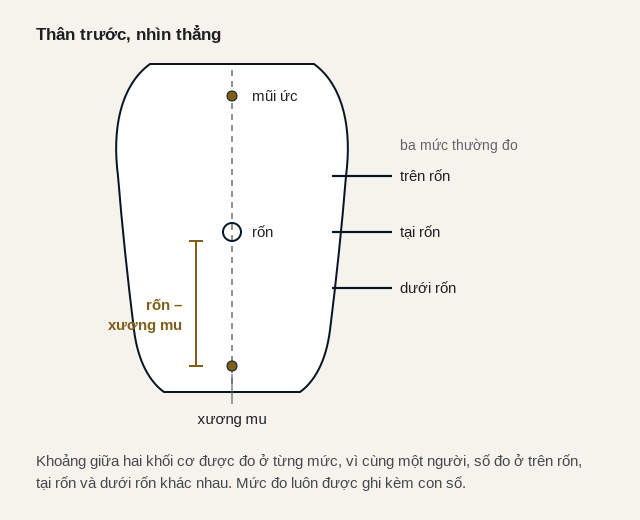
The gap between the two muscle bellies varies with the measuring point in the same person, so a number is only meaningful when the level is recorded with it. A review of ultrasound measurement techniques notes that the literature has used many different levels, from 2 to 12 cm above the umbilicus and 2 to 4.5 cm below it, so figures from different studies cannot be compared directly; the authors propose a standard set of levels and averaging three measurements at each site[3]. The same review notes that the conventional “two finger-widths” on palpation corresponds to about 3 cm, but this figure varies between examiners[3].
Another review compiles the thresholds in current use: palpation usually uses a cut-off of 2 cm or more; the finger-width classification grades under 2 finger-widths as no diastasis, 2–3 as mild, 3–4 as moderate and over 4 as severe; with calipers, the cut-offs are over 10 mm above the umbilicus, over 27 mm at the umbilical ring and over 9 mm below the umbilicus[2]. In women who have not given birth, the maximum midline width has been recorded as about 15 mm at the xiphoid, 22 mm at 3 cm above the umbilicus and 16 mm at 2 cm below the umbilicus[2].
What can exercise change?
Exercise remains the first step, usually starting about 6–8 weeks after childbirth, together with guidance on posture and back care[1]. But it is important to know its limits: a systematic review cited concludes that physiotherapy does not eliminate the gap when the muscles are at rest, and only reduces the distance to a limited extent when the muscles contract[1]. A randomised trial in 175 first-time mothers found that a 16-week exercise programme made no difference from the control group in the rate of diastasis at 6 and 12 months after childbirth[1].
Exercises also do not all act in the same way. The treatment review notes that some exercises narrowed the gap at most measuring points, whereas abdominal drawing-in actually widened the gap at 2 cm below the umbilicus in one study; to date there is no standard exercise programme[2]. Most women recover partially on their own in the early postpartum period[2].
When does surgery come into the discussion?
The general approach is conservative treatment first, with surgery considered only when exercise does not help and symptoms persist[1][2]. On timing, the authors suggest waiting at least one year after childbirth where possible because of the potential for spontaneous recovery, and seeking a surgeon's opinion if symptoms persist after 2–6 months of conservative treatment[1]. The surgical approach is chosen according to severity and whether there is excess skin: midline plication for mild to moderate cases, mesh techniques for moderate to severe cases, and abdominoplasty when there is associated excess skin[2].
When should a child be seen early?
Call 115 or go to the emergency department immediately if a bulge in the abdomen becomes painful, firm, does not go down when you lie down, or comes with vomiting or inability to pass stool or gas.
See a doctor early if a new localised bulge appears at the midline or around the navel, if abdominal or back pain keeps increasing, or if urinary leakage affects daily life: these need to be examined, not managed by following exercise instructions online.
Where procedures are performed
At the clinic, Dr. An provides examination and consultation. Abdominoplasty procedures are performed at an appropriately licensed hospital. Dr. An will discuss the details with you during your consultation.
References
- Jessen ML, Öberg S, Rosenberg J. Treatment options for abdominal rectus diastasis. Front Surg. 2019;6:65. doi:10.3389/fsurg.2019.00065
- Radhakrishnan M, Ramamurthy K. Efficacy and challenges in the treatment of diastasis recti abdominis: a scoping review on the current trends and future perspectives. Diagnostics (Basel). 2022;12(9):2044. doi:10.3390/diagnostics12092044
- Opala-Berdzik A, Rudek-Zeprzałka M, Niesporek J, et al. Technical aspects of inter-recti distance measurement with ultrasonographic imaging for physiotherapy purposes: the scoping review. Insights Imaging. 2023;14:92. doi:10.1186/s13244-023-01443-4
The references above are open-access publications by other groups of authors, listed for further reading. This article only summarises what the authors describe, along with the limitations of each study.